How Plastifloor MMA + Flex Membrane 332 Compares to Other Systems
When selecting a flooring system for industrial, food processing, or commercial facilities, the key factors are downtime, durability, and long-term reliability. While epoxy, urethane cement, and polyaspartic systems are common, each has limitations—especially in environments exposed to movement, thermal cycling, and heavy use.
The combination of Plastifloor MMA with Flex Membrane 332 is designed to address those challenges.
Compared to Epoxy Systems
Epoxy is widely used due to its lower material cost, but it performs best in stable environments.
Cure Time: Epoxy requires 24–72 hours; MMA returns to service in hours
Flexibility: Epoxy is rigid and prone to cracking
Thermal Performance: Limited resistance to temperature swings and washdowns
Summary: Epoxy is suitable for controlled environments but carries higher risk where movement or fast turnaround is required.
Compared to Urethane Cement
Urethane cement is known for durability and thermal resistance, but still has limitations.
Installation Time: Typically 2–4 days vs. same-day MMA
Crack Resistance: Limited ability to handle substrate movement
Repairs: Require longer shutdowns
Summary: Durable system, but less efficient and less flexible compared to membrane-reinforced MMA.
Compared to Polyaspartic Systems
Polyaspartics offer faster curing than epoxy but are typically thinner coating systems.
System Structure: Coating vs. full system build
Cold Applications: Limited performance in low temperatures
Flexibility: Minimal movement accommodation
Summary: Faster than epoxy, but lacks the structural performance of a full MMA system.
Why Flex Membrane 332 Matters
Most flooring failures begin in the substrate.
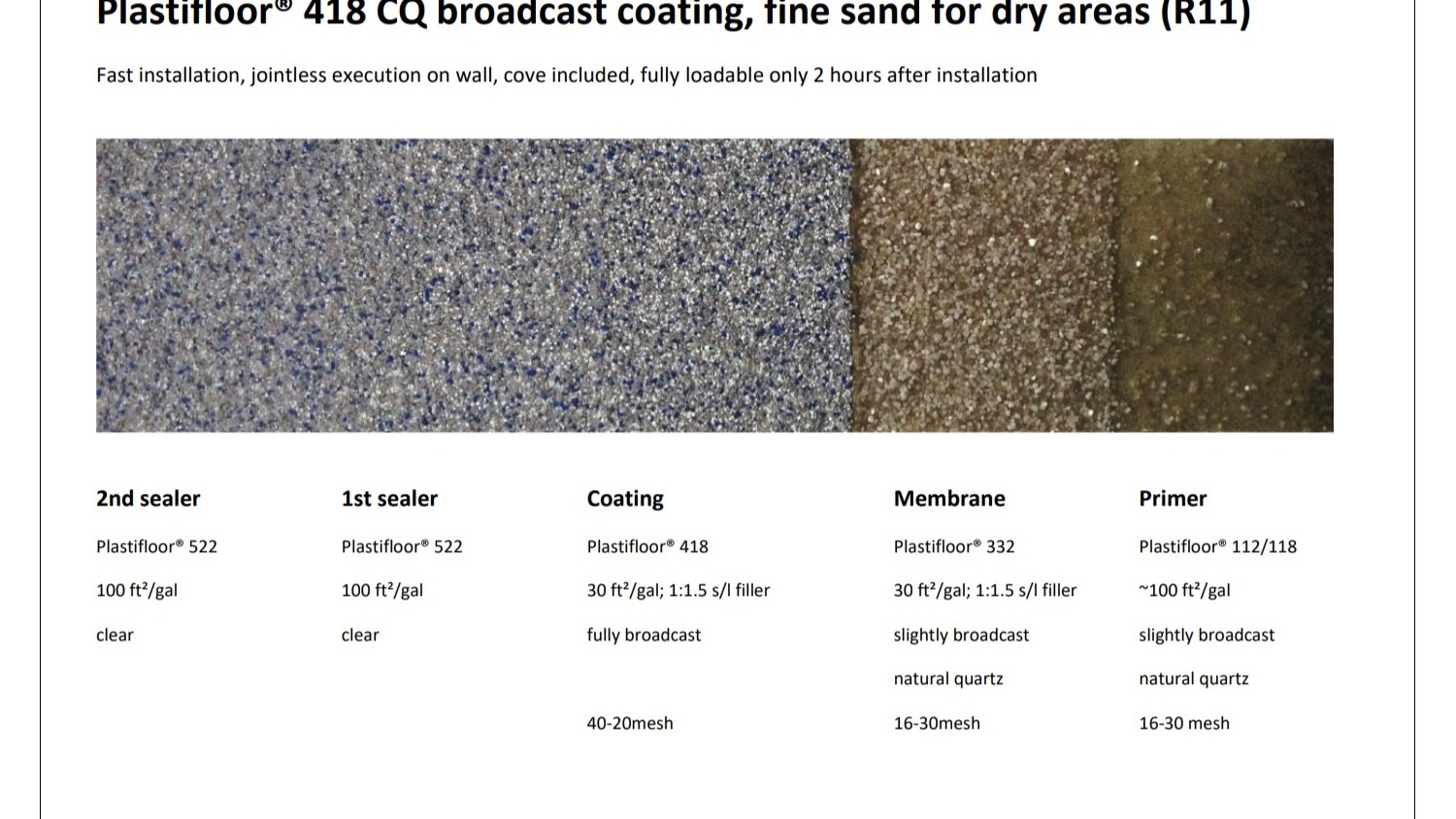
The Plastifloor 332 membrane is installed between the concrete and the top layer to manage movement.
It:
Bridges hairline cracks
Absorbs vibration and loading
Handles thermal expansion and contraction
Reduces stress transfer to the surface
Adds waterproofing protection
This is critical in:
Older or cracked slabs
Freezers and hot washdown areas
Facilities with heavy equipment
Instead of resisting movement, the system is designed to absorb it.
Performance & Value
While MMA systems may have a higher upfront cost than basic coatings, the real evaluation includes:
Downtime impact
Repair frequency
Maintenance needs
Operational disruption
In active facilities, MMA systems typically reduce long-term risk and cost.
Best Fit Applications
Food processing and packaging
Cold storage and freezers
Breweries and beverage plants
Industrial manufacturing
Commercial kitchens
Conclusion
Most systems are designed for ideal conditions.
Plastifloor MMA with Flex Membrane 332 is designed for real operating environments.
It delivers:
Fast return to service
Resistance to cracking and movement
Long-term durability under stress